Tarot in Relationships: Mastering the “Celtic Cross” Spread for Deep Analysis
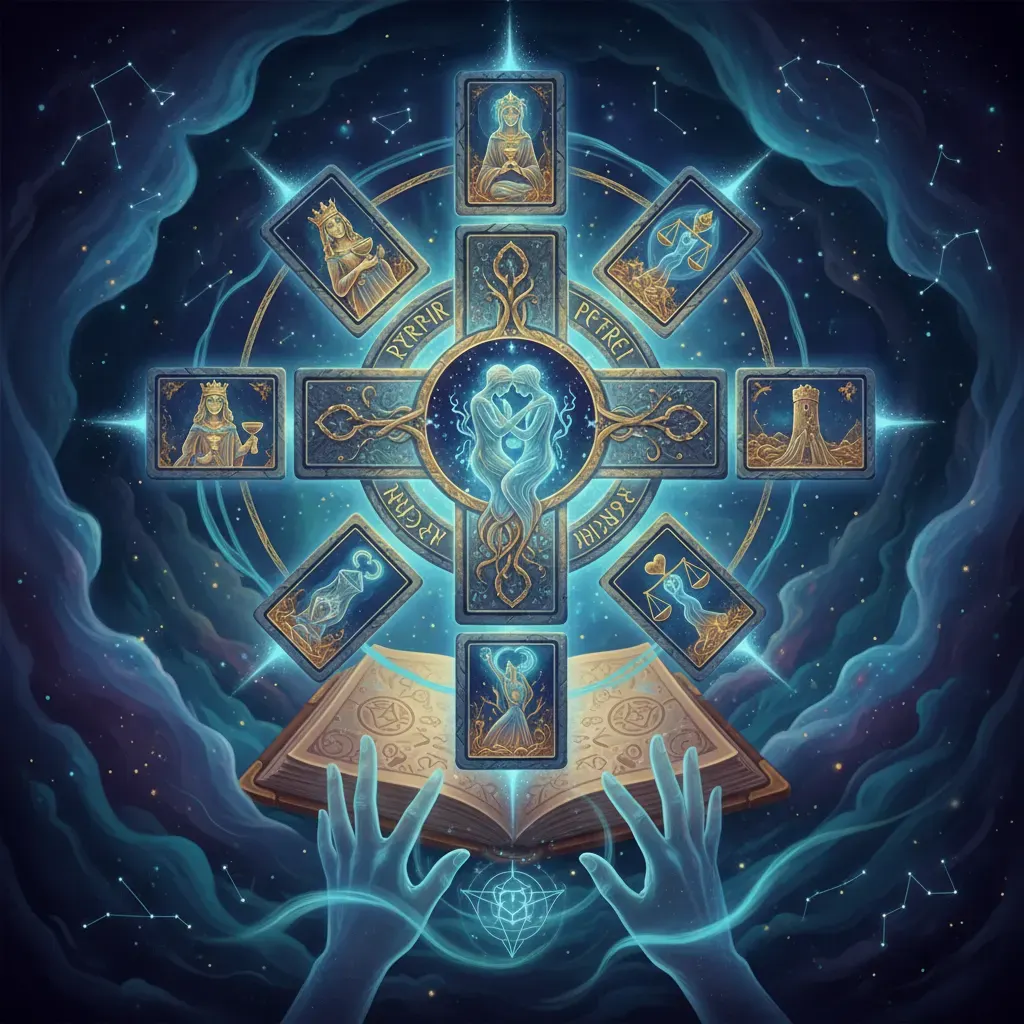
Dear seekers of truth, today we will delve into the sacred depths of Tarot, focusing on one of the most powerful and informative spreads for relationship analysis – the “Celtic Cross”. This spread, though universal, when interpreted correctly, can reveal the most hidden aspects of the interaction between two souls.
Preparation for the Spread
Before laying out the cards, it is necessary to clearly formulate your question. For relationships, this could be: “What energies currently dominate my relationship with [Partner’s Name]?”, “What hidden challenges are we experiencing?”, “What potential does our union hold?”. Your energy and intention are key to an accurate answer. Clear the space, focus on the object of your inquiry.
Positions and Their Meaning in the Context of Relationships
The “Celtic Cross” consists of ten cards, each carrying a unique meaning. Let’s consider their interpretation specifically for relationships:
- 1. Center (Present Situation): Reflects the essence of the relationship here and now. What is its main energy? What is its current state?
- 2. Obstacle/What Crosses (Challenge): Shows what stands in the way of harmony or what requires attention. This could be an internal conflict, an external factor, or a hidden problem.
- 3. Foundation (Subconscious): The roots of the relationship, its foundation. Why are you together? What subconscious motives guide you?
- 4. Past (What is Behind): Important events or experiences that shaped the current relationship. This could be previous relationships, childhood traumas, or a shared past.
- 5. Goal/Conscious (What is Ahead, but Consciously): What you strive for in the relationship, your expectations and hopes.
- 6. Future (Near Future): The most likely development of events in the short term, if nothing changes.
- 7. You (Your Position): Your role in the relationship, your feelings, actions, and attitude.
- 8. Environment (Partner/External Influences): How the partner sees the relationship, their feelings and actions, or the influence of the external environment (friends, family, work).
- 9. Hopes and Fears: Your hidden desires, aspirations, as well as fears regarding the relationship.
- 10. Outcome (Potential): The final summary or potential result of the relationship’s development. This is not a verdict, but only the most likely scenario, which can be changed.
Deep Interpretation and Card Interaction
True mastery lies not only in reading individual cards but also in seeing their interaction. Pay attention to recurring arcana, to dominant suits (Wands – passion, Cups – emotions, Swords – conflicts, Pentacles – stability). For example, if a Sword appears in the “Obstacle” (2) position, and a Cup in the “Foundation” (3), this may indicate that the emotional foundation of the relationship is being undermined by intellectual disputes or sharp words.
Don’t forget about reversed cards. They indicate blocked energy, internal conflicts, or the need to review certain aspects. A reversed Emperor in the “You” position may mean your struggle with control or a lack of leadership qualities in the relationship.
Practical Advice
After completing the spread and its interpretation, do not rush to conclusions. Give yourself time to process the information received. Write down key points. If the answer seems complex or contradictory, do not hesitate to do an additional spread to clarify a specific position. Remember: Tarot is a tool for self-knowledge and development, not a fatal verdict. You always have the power to change your path.